Baltimore in the Civil War
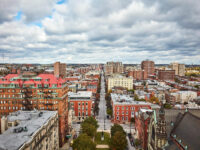
Civil War Baltimore offers a look at a large American city (at the time it was the third largest in the country) in a state that did not secede but was nevertheless overseen and at times administered by the U.S. Army. After a violent skirmish that drew the first blood in the terrible conflict, Federal troops moved in and for the next four years Baltimoreans who supported the South lived under the watchful eyes of a military commander and his provost marshal. While the city's business ties to the South withered and died, it cared for tens of thousands of wounded from both sides and served as a major transportation hub and supply depot for the Union army. To visit Baltimore is to see how this story unfolded, and to feel its lingering aftermath.
In the bitter electoral campaign of 1860, four parties nominated presidential candidates, three of them in Baltimore. On May 9, a week before Republicans nominated Abraham Lincoln in Chicago, the remnants of the Whig and American (Know Nothing) parties convened here as the Constitutional Union Party and settled upon moderate John Bell for president in a search for sectional compromise. Just days earlier, the Democratic Party had deadlocked without a nominee in Charleston, S.C. On June 18 the party reconvened in Baltimore. This time when Southerners walked out, the remaining delegates nominated Senator Stephen A. Douglas of Illinois. Ten days later, the seceding delegates returned to Baltimore to select John C. Breckinridge on a strong pro-Southern platform. Breckinridge would carry Baltimore, but Lincoln, who received few votes here, won the election.
Beginning a month later and throughout that winter, the states of the Deep South, led by South Carolina, left the Union. Maryland's legislature had voted to cast its lot with the South if secession became a fact, but it would not meet again for nearly two years. Maryland nervously watched developments, and the nation kept an eye on the state, for if it and Virginia joined the Confederacy, the U.S. capital would be surrounded by foreign nation.
In February 1861, as President-elect Lincoln made his way east by train to Harrisburg and Philadelphia, detective Alan Pinkerton received word that Southern radicals intended to assassinate him in Baltimore. The city was known to be a violent place-murders and assaults were common, elections sometimes brought on deadly riots, and it was referred to around the nation as "Mobtown." On Pinkerton's advice, Lincoln made a secret passage through the city, disappointing those who had hoped to get a glimpse of him.
Just six weeks later, and little more than a month into Lincoln's presidency, war broke out with the firing on Fort Sumter in Charleston harbor. Lincoln called for 75,000 volunteers to put down the rebellion, but those destined for Washington had to first pass through Baltimore. On April 18, a Pennsylvania regiment was hooted and pelted with rocks as it marched from one train station to another. The next day two more regiments arrived. Four companies of the 6th Massachusetts Volunteer Militia were set upon by a mob on Pratt Street and opened fire, killing a dozen civilians before reaching the safety of Camden Station.
This "Riot of April Nineteenth" as it has come to be called, confirmed Northern suspicions that Baltimore was disloyal, and succeeding waves of Union volunteers treated it that way. On the night of May 13, General Benjamin F. Butler marched in beneath a violent thunderstorm and stationed his soldiers on Federal Hill. Butler was quickly relieved for impetuousness, but Union guns could now reach any part of the city. The Federal garrison at Fort McHenry was reinforced, and the fort became the place where military authorities sent persons suspected of disloyalty, including Baltimore's mayor and police commissioner. More arrests followed. Newspapers supporting the South were shut down, and others had to be careful what they printed. To celebrate the Fourth of July, 1863, and the Union victory at Gettysburg, General Robert C. Schenck ordered all loyal Union households to fly the national flag. Those who did not display it were revealing where their sympathies lay.

Although many in Baltimore were strongly Unionist, and the city furnished large numbers of recruits for white regiments and, after 1863, regiments of U.S. Colored Troops, including Medal of Honor winner Christian Fleetwood of the 4th USCT, many young men managed to make their way to Confederate lines. The city's social leadership, which favored the South, went to prison or kept quiet. Mothers and wives regularly attempted to smuggle medicines and supplies to Confederate sons and husbands, but those who were caught were detained by the provost marshal and shipped across the lines. Union spies observed the funerals of Confederate soldiers and took down the names of mourners.
Lincoln made two more visits. In 1864 he spoke briefly at a great "Sanitary Fair" staged by Baltimore organizations to raise money and medical supplies for Union wounded. A year later, his funeral train pulled into Camden Station and his cortege made its way through the silent crowd to let his body lie in state at the Merchants' Exchange building before resuming its mournful journey back to Springfield.
Wartime animosity remained deep for years. Former colleagues who had supported different sides no longer spoke to one another. Social leaders resumed their influence, businesses raised money for the devastated South, and the city became a haven for displaced Southerners and Southern writers. It also became a mecca for freed slaves. The African American community, which had jubilantly celebrated emancipation in Maryland with the new state constitution of 1864, staged another mammoth celebration on the passing of the Fifteenth Amendment-which Maryland refused to ratify until the 1970s. At the Maryland Historical Society, Union and Confederate veterans donated memorabilia to two different "rooms." The society did not display the contents of the Union Room and the Confederate Room together until 1994. From 1861 to 1865, and for years afterward, Baltimore truly was a "house divided."
Places to Visit in Civil War Baltimore
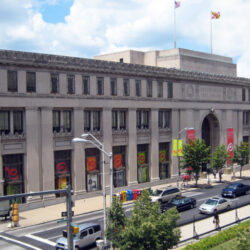
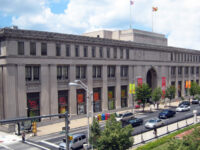
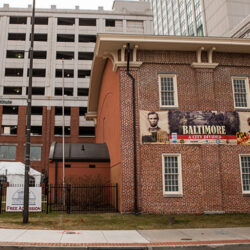
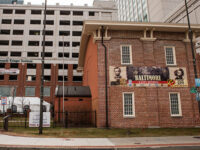
President Street Station
601 S. President Street
Built in 1850, it was the southern terminus of the Philadelphia, Wilmington & Baltimore Railroad. Prior to the war, fugitive slaves occasionally escaped on northbound trains.
Lincoln Assassination Plot
While making his way from Springfield, Illinois, to Washington, Lincoln was informed of a plot to assassinate him in Baltimore. He was scheduled to arrive at the Calvert Street Station, where, in the station's narrow vestibule, a Baltimore barber named Cypriano Ferrandini and his associates intended to murder him. On the advice of Allan Pinkerton, a detective working for the Philadelphia, Wilmington, and Baltimore Railroad, Lincoln left his family and secretly took a special train into Baltimore, arriving at President Street at 3:30 a.m. on the morning of February 23, 1861. Wearing a soft felt hat and with a long overcoat draped over his shoulders to deceive would-be assassins, he made his way across town without incident.
Pratt Street
On April 19, 1861, the 700 men of the 6th Massachusetts Volunteer Infantry arrived at the PW&B's President Street Station, together with 1,200 unarmed Pennsylvanians. Because a city ordinance passed years before prohibited locomotives passing through the city, the cars carrying the troops had to be drawn by teams of horses westward on rails laid along Pratt Street to Camden Station, a distance of about a mile. A crowd gathered to protest their presence and grew as the first cars started out. The first six companies arrived at Camden Station without serious incident, but then the mob blocked the tracks with an anchor and a cartload of sand, forcing the remaining companies to return to President Street and begin again on foot.
As the column crossed the Jones Falls bridge and began the long march down narrow, crowded Pratt Street (following the Baltimore Fire of 1904, it was widened into the boulevard of today), a few shots were fired, probably by the mob discharging pistols into the air. Some of the crowd lunged at the ranks in an attempt to seize flags and weapons. From the street and from the upper stories of shops and sailors' boarding houses, men (and probably women) hurled brickbats and other heavy objects that struck the troops in their tight formation. A number of soldiers fell, four of them mortally wounded, before they opened fire, killing a dozen rioters and wounding many more before the mayor and police marshal arrived to restore order.
The Pratt Street Riot, or, as it was known in the North, "The Lexington of 1861" (ironically, the Sixth hailed from Lexington and Concord), defined Baltimore's fate for the rest of the war. Civic authorities ordered bridges north of the city to be burned to prevent more troops from entering and causing further bloodshed, but Massachusetts General Benjamin F. Butler, at the head of another regiment, sailed down the Chesapeake, seized Annapolis and the Naval Academy, and moved west to the vital B&O station at Relay Junction. A week later, on May 13, he marched into Baltimore under cover of a thunderstorm and occupied the heights of Federal Hill, overlooking the harbor and the heart of the city. The Federal garrison at Fort McHenry received reinforcements. Baltimore was suddenly under military control and would remain so for the next four years.
Camden Station
Now the site of Oriole Park at Camden Yards, this was the Baltimore terminus of the B&O Railroad. It was from here that the battered 6th Massachusetts entrained for Washington. A large slave jail was located just north of the yards, where the military provost marshal detained suspects. Lincoln arrived here on his way to deliver the Gettysburg Address, and in 1865 his funeral train brought his body here on the long procession back to Springfield, Ill.
Federal Hill
South side of the Inner Harbor
Originally called Signal Hill for its role in signaling merchants of incoming ship traffic, it was renamed in 1789 when it served as the end point of a parade celebrating ratification of the new federal Constitution. In 1861 General Benjamin F. Butler's Massachusetts troops built a fort on its heights that was soon garrisoned by artillery units whose heavy guns could easily any part of the city. (Similar guns are visible today at Fort McHenry.) The entire hill was covered with walls, gun emplacements, and barracks. Regiments posted there included the 5th New York Artillery, and the 8th New York Heavy Artillery.
Fort McHenry
2400 E. Fort Avenue
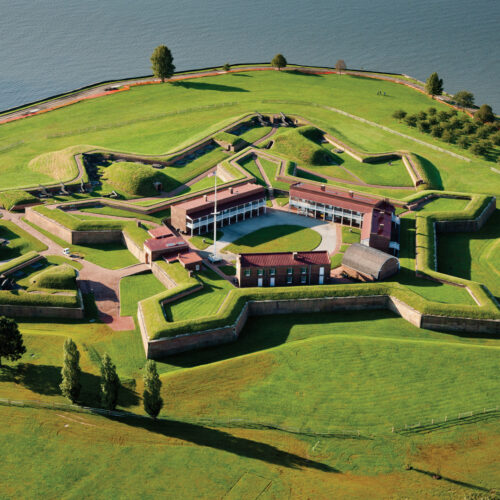
Famed site of the 1814 Battle of Baltimore and Francis Scott Key's poem, "The Star-Spangled Banner." In the days after the skirmish on Pratt Street, a junior officer threatened to train his guns on the Washington Monument. A city representative angrily replied that if he did, "there will be nothing left of you but your brass buttons to tell who you were." Reinforcements soon arrived, and the fort was basically a prison for much of the war. Prisoners included Mayor George William Brown, Marshal George P. Kane of the Baltimore police, and prominent attorney Severn Teackle Wallis. Held there, too, was John Merryman, whose case came before Supreme Court Chief Justice Roger B. Taney and resulted in the landmark opinion, ex parte Merryman, in which Taney rebuked Lincoln for permitting the military to arrest citizens when the civil courts were in operation.
Normally, the fort held 250-300 prisoners, though after the battle of Gettysburg nearly 7,000 Confederates were kept here briefly before being distributed among other prisoner-of-war camps.
Fell's Point
Located east of the Inner Harbor, Fell's Point in the eighteenth and nineteenth centuries was a shipbuilding center, home to Baltimore clippers and privateers in the War of 1812, and the place where a young slave named Frederick Bailey worked as a ship caulker before escaping slavery on the Eastern Shore, changing his name to Frederick Douglass, and becoming a renowned abolitionist. A plaque at Aliceanna and Durham streets marks where Douglass lived, and the references to Baltimore in his autobiographies pertain to this section of the city.
USS Constellation
301 E. Pratt Street, Inner Harbor
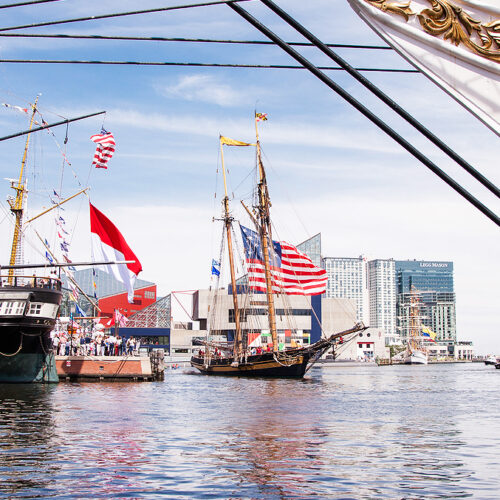
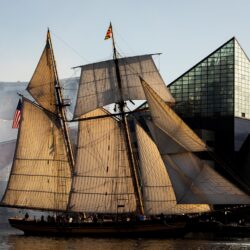
Controversy remains over the date of this ship's construction, but in the 1850s it patrolled the West African Coast to interdict the slave trade and sailed the Mediterranean during the Civil War.
Patterson Park
The site of one of the largest of forty-two military installations that eventually arose around Baltimore. The park was then on the outskirts of the city, and selected to be an army camp for its height above sea level. Its hospital barracks could accommodate 1,200 beds.
Mount Vernon Place
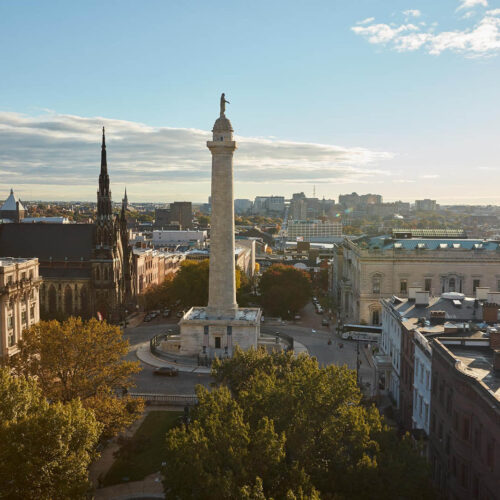
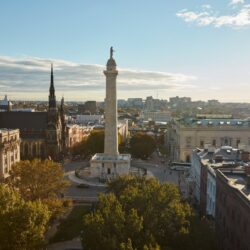
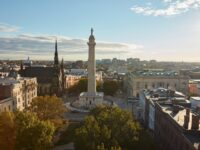
Lined with magnificent nineteenth-century townhouses, the park contains statues of Chief Justice Roger Brooke Taney and Severn Teackle Wallis. Its 1829 Washington Monument was designed by Robert Mills, who designed the Washington Monument in the nation's capital. The neighborhood was strongly pro-Southern and the site of numerous political rallies.
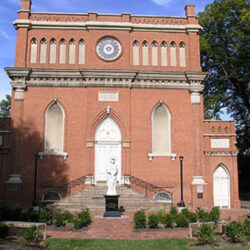
Maryland Historical Society
201 W. Monument Street, just west of Mount Vernon Place
The society has a large Civil War collection. Since many of its nineteenth-century members had fought for the Confederacy or sympathized with the South, its library contains numerous early publications pertaining to the war.
B&O Railroad Museum
901 W. Pratt Street
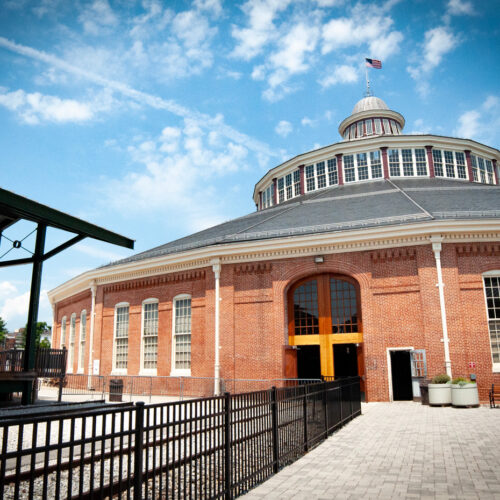
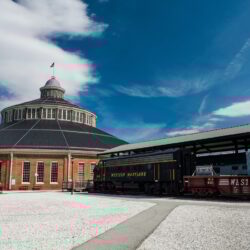
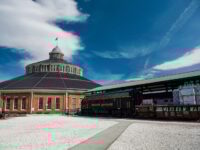
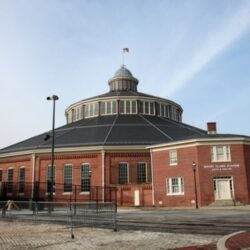
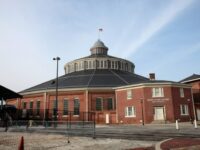
Site of the original Mt. Clare yards, houses a magnificent selection of historic locomotives and railroad cars. The grounds of nearby Mt. Clare Mansion, the eighteenth-century home of Charles Carroll, Barrister, were used as an army encampment-Camp Carroll-during the war.
Cemeteries
Loudon Park Cemetery, near Catonsville, holds the graves of many Civil War veterans. A number of noted Maryland Confederates are interred on "Confederate Hill," presided over by a statue of Stonewall Jackson. Greenmount Cemetery (1501 Greenmount Avenue) contains the graves of many prominent Marylanders, including railroad builder and ardent secessionist Ross Winans, and Lincoln assassin John Wilkes Booth.
Monuments
Confederate Monument - (Old Mount Royal Avenue and Mosher Street) Commissioned by the United Daughters of the Confederacy and entitled "Gloria Victis," this statue of a winged figure holding aloft a laurel wreath while supporting a wounded Confederate soldier symbolizes glory bestowed upon the vanquished. A huge crowd attended its dedication in 1903.
Union Soldiers and Sailors Monument - (29th and Charles Street, at the southern end of Wyman Park dell.) Dedicated in 1909, it depicts two angels, "War" and "Victory," pushing a farmer from his plow as he dons a uniform and sword belt. Originally at the entrance to Druid Hill Park, the monument was moved to its current site to accommodate an expressway ramp.
Monument to Confederate Women - (Charles Street and University Parkway, near the Johns Hopkins University's Homewood Campus.) Sponsored by the United Daughters of the Confederacy and dedicated in 1918, it depicts one woman looking off into the distance while a mother holds her dying son. The inscription reads, "In difficulty and in danger, regardless of self, they fed the hungry, clothed the needy, nursed the wounded, and comforted the dying."
Lee and Jackson Monument - (Art Museum Drive, north end of Wyman Park dell.) This equestrian statue depicting Robert E. Lee and Stonewall Jackson's historic meeting before the stunning Confederate victory at Chancellorsville has been the site of reenactment ceremonies each January to commemorate the generals' birthdays. It was celebrated as the world's first double equestrian statue cast all in one piece.
Other nearby Civil War sites and attractions with drive time from Baltimore.
Gettysburg (90 minutes)
Antietam Battlefield (75 minutes)
Tudor Hall-home of John Wilkes Booth (50 minutes)
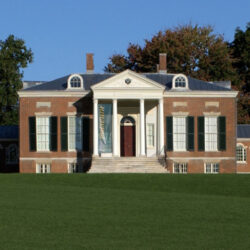
Hampton mansion-nineteenth-century plantation (20 minutes)
Further reading: Susan Cooke Soderberg, A Guide to Civil War Sites in Maryland: Blue and Gray in a Border State (White Mane Books, 1998).
Plan your trip!
Today's Events
- Physical Comedy Class May 18, 2013 - June 22, 2013 | 1:00pm - 3:00pm
- Divided Voices: Maryland in the Civil War April 16, 2011 - December 31, 2015 | All Day
- The Art of Storytelling: Lies, Enchantment, Humor & Truth October 6, 2012 - September 1, 2013 | All Day
- Family Fun Night - 2nd Thursday of each Month! January 10, 2013 - December 12, 2013 | 4:00pm - 6:00pm
- BMI Farmers' Market May 18, 2013 - October 26, 2013 | 9:00am - 1:00pm


Login to your account